Reflections
As part of the Vanderbilt Kennedy Center's 50th anniversary celebration, families, researchers, staff, trainees, and others shared their reflections. View a sample below, and select "more" to view additional comments.
| A reflection from a family |
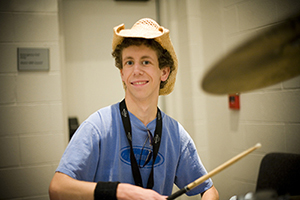 | The Kennedy Center has been so important to our family. Our son Seth who is now 25 was born with Williams syndrome, which presents both physical and cognitive challenges. The programs at the Vanderbilt Kennedy Center have focused on Seth’s abilities and highlighted his talents. Seth has participated for the past 9 years in a music camp for individuals with Williams syndrome, which takes place in Nashville at the Kennedy Center with the campers writing and performing a song at the Grand Ole Opry and participating in research during the week. It has been transformative for Seth and he has made life-long friends through these amazing opportunities. Becky and Chris Link - Parents See More... |
| A reflection from a researcher |
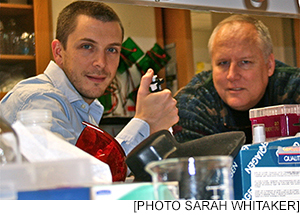 | Early in my career my lab focused on fundamental neurobiology and identifying genes and proteins that impact chemical signaling. When I came to Vanderbilt and joined the VKC, I was encouraged to consider how my work on serotonin and dopamine transporters might link to neurodevelopmental disorders. I was impressed early on with the breadth of talent assembled by the VKC and the connections I made in this community started me down that path. My lab’s work is very focused, just one step, and our efforts might be wasted if not embraced in a larger context. I started my translational efforts with a VKC Hobbs Discovery Grant, and have been excited to see these efforts blossom. This grant allowed me to develop approaches to scan human transporter genes for mutations, efforts that led to the discovery or alterations in the dopamine transporter in subjects with ADHD, as well as changes in the serotonin transporter gene in subjects with autism. These mutations, which remain under active study in our lab as well as with collaborators, have led to significant funding from the NIH, and have been transferred into animal models so that we may gain insights into brain changes and possibly develop new treatments. Randy Blakely, Ph.D. - Pharmacology and Psychiatry See More... |
| A reflection from a trainee |
| I am the proud parent of four young children, one of whom has Down syndrome. Besides benefiting from their vast array of supports and services, I am currently receiving valuable research experience as a doctoral student in special education and receiving specialized disability-specific training through the VKC. Thomas Boehm - Parent, Doctoral Student in Special Education, and VKC UCEDD Trainee See More... |
| A reflection from a professional |
| [The VKC] is an absolutely amazing place to work, but more importantly, people here truly help to change lives for the better. I’ve worked here in some capacity since I graduated from the Master’s of Special Education program in 2007, and I cannot think of a better place to refer families who have a loved one with a disability. In my own work, we are helping high school students with autism and their families prepare for the transition from high school, and we are also helping faith communities as they support people with disabilities to find and hold employment. Jenny Gustafson - Special Education Alumna and VKC Disability Professional See More... |
Submit your reflection here