The Healthy Bodies Toolkit for Girls
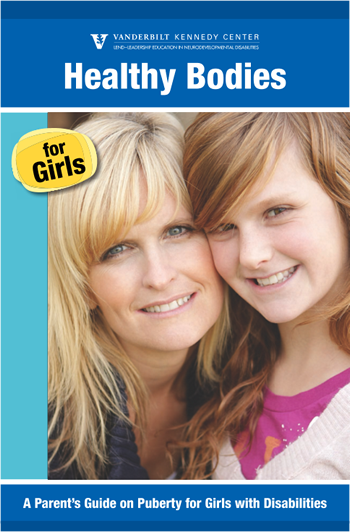 |
Girls Toolkit Web Version
Girls Toolkit Appendix Puberty, Sex, and Sexuality: An Introduction for Autistic Teens and Adults Toolkit [PDF] Navigating Puberty, Sex, & Sexuality: A Guide for Supporting Autistic Teens and Adults Toolkit [PDF] |
Healthy Bodies Toolkit Translations
Arabic (عربى): View the Healthy Bodies Arabic translations below.
مجموعة أدوات الأجسام الصحية للأولاد
ملحق الأجسام الصحية للبنين
مجموعة أدوات الأجسام الصحية للفتيات
ملحق الأجسام الصحية للفتيات
French (Français): View the Healthy Bodies French translations below.
- Un corps en bonne santé pour les garçons (Toolkit for Boys)
- Un corps en bonne santé – Annexe pour les garçons (Appendix for Boys)
- Un corps en bonne santé pour les filles (Toolkit for Girls)
- Un corps en bonne santé – Annexe pour les filles (Appendix for Girls)
German (Deutsche): View the Healthy Bodies German translations below.
- Gesunder Körper für Jungen (Toolkit for Boys)
- Gesunder Körper – Anhang für Jungen (Appendix for Boys)
- Gesunder Körper für Mädchen (Toolkit for Girls)
- Gesunder Körper – Anhang für Mädchen (Appendix for Girls)
Greek: View the Healthy Bodies Turkish translations View the Healthy Bodies Greek adaptations: Toolkit for Boys and Toolkit for Girls. These materials were translated and adapted as part of the project Neurodiversity and Adolescence: Body, Relationships and Consent, implemented within the framework of the PLATO program by Os Aido. Funded by the European Union. The views and opinions expressed are solely those of the authors and do not necessarily reflect those of the European Union, the European Education and Culture Executive Agency (EACEA), the Bodossaki Foundation, or the NGO Support Centre. These organizations cannot be held responsible for the views expressed.
Portuguese (Portuguesa): View the Healthy Bodies Portuguese translations below. Language translation by Jennifer Bremer with the Grupo Método Intervenção Comportamental in São Paulo, Brazil.
- Corpos Saudáveis para Meninos (Toolkit for Boys)
- Corpos Saudáveis para Meninos Apêndice (Appendix for Boys)
- Corpos Saudáveis para Meninas (Toolkit for Girls)
- Corpos Saudáveis para Meninas Apêndice (Appendix for Girls)
- Puberdade, Sexo, e Sexualidade (Puberty, Sex, and Sexuality)
Spanish (Español): View the Healthy Bodies Spanish translation here.
Thai: View the Healthy Bodies Thai translations Appendix for Boys and Appendix for Girls. Thai language translation by Vigunya Taranajetda, Sararat Tuntipuchitanon, Pon Trairatvorakul and Maximizing Thai Children’s Developmental Potential Research Unit, Department of Pediatrics, Faculty of Medicine, Chulalongkorn University, Bangkok, Thailand.
Turkish: View the Healthy Bodies Turkish translations Toolkit for Boys and Toolkit for Girls. This translation has been prepared under the European Union Sivil Düşün Program, with the support of the European Union. The responsibility of the content belongs entirely to Tohum Autism Foundation and does not reflect the views of the EU.
Healthy Bodies Toolkit Credits
This publication was developed and written by Vanderbilt Leadership Education in Neurodevelopmental Disabilities (LEND) long-term trainees Amy Weitlauf, PhD; Stormi White, PsyD; Olivia Yancey, MDE; Caitlin Nicholl Rissler, MSN; Doctor of Audiology student, Elizabeth Harland; Cong Van Tran, PhD; and LEND faculty members Jennifer Bowers, RN, MSN, CPNP, Pediatric Nurse Practitioner, Division of Developmental Medicine; and Cassandra Newsom, PsyD, Assistant Professor of Pediatrics, Division of Developmental Medicine, Director of Psychological Education, Treatment and Research Institute for Autism Spectrum Disorders (TRIAD)/Vanderbilt Kennedy Center. It was edited, designed, and produced by the Communications and Graphics staff of the Vanderbilt Kennedy Center for Excellence in Developmental Disabilities (Kylie Beck, BA; Jan Rosemergy, PhD; Courtney Taylor, MDiv) with the support of the Vanderbilt LEND (Pam Grau, BS; Evon Lee, PhD; Terri Urbano, RN, MPH, PhD). We are grateful for review and suggestions by many, including faculty of TRIAD and members of Autism Tennessee.
All text and illustrations are copyrighted by the Vanderbilt Kennedy Center and cannot be used in another context without written permission of Vanderbilt Kennedy Center Communications (kc@vumc.org, 615-322-8240).
This publication was made possible by Grant No. T73MC30767 from the Maternal and Child Health Bureau (MCHB), Health Resources and Services Administration (HRSA), Department of Health and Human Services (HHS). Its contents are solely the responsibility of the authors and do not necessarily represent the official views of the MCHB, HRSA, HHS. Photos ©istockphoto.com. Printed June 2013.
